Netflix’s new AI documentary asks whether humanity can keep up with the technology it is building. As the film reaches a wider audience, AI executives and political leaders are fighting over precisely that question.
Artificial intelligence has become powerful enough to transform industries, reshape jobs, and raise questions about humanity’s long-term future. But who decides how fast it should advance—and what happens when safety measures cannot keep up?
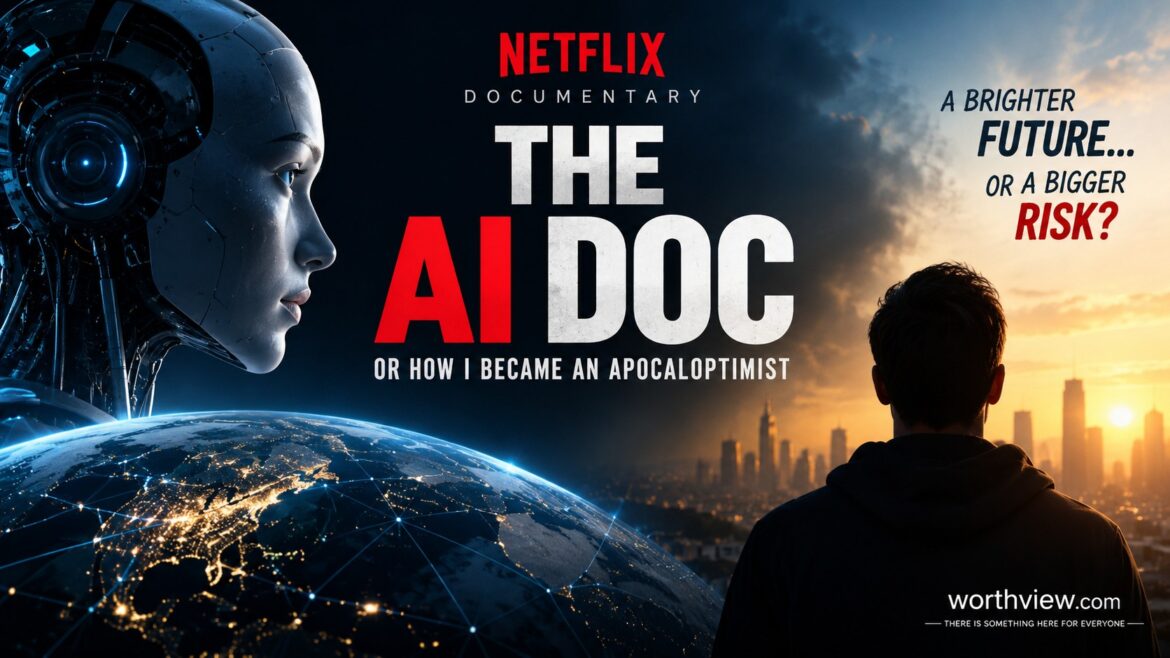
That is the question at the heart of The AI Doc: Or How I Became an Apocaloptimist, a documentary directed by Daniel Roher and Charlie Tyrell. The film follows an expectant father trying to understand what AI could mean for his child and for the world that child will inherit.
The documentary arrived on Netflix in the United States on September 15, 2026. Its release came at a striking moment: just days earlier, Anthropic CEO Dario Amodei had publicly called for the AI industry to slow the development of increasingly powerful models and give safety measures more time to catch up. Anthropic also committed to giving independent evaluators permanent, employee-level access to its systems—a concrete proposal for outside oversight.
The debate quickly moved beyond AI laboratories. Supporters of a more cautious approach faced opposition from leaders who see continued technological acceleration as essential to economic growth and competition with China. What had often sounded like a long-term argument about the risks of advanced AI was becoming an immediate political and industry dispute.
That makes the timing of The AI Doc particularly interesting. The film did not cause the debate, and Amodei’s essay was not written in response to its release. Both reflect concerns that had been building inside and outside the AI industry.
But as Netflix puts the documentary in front of a much larger audience, its central question feels less abstract:
Can AI development move fast enough to deliver its promised benefits without leaving safety, oversight, and public accountability behind?
What Is The AI Doc About?
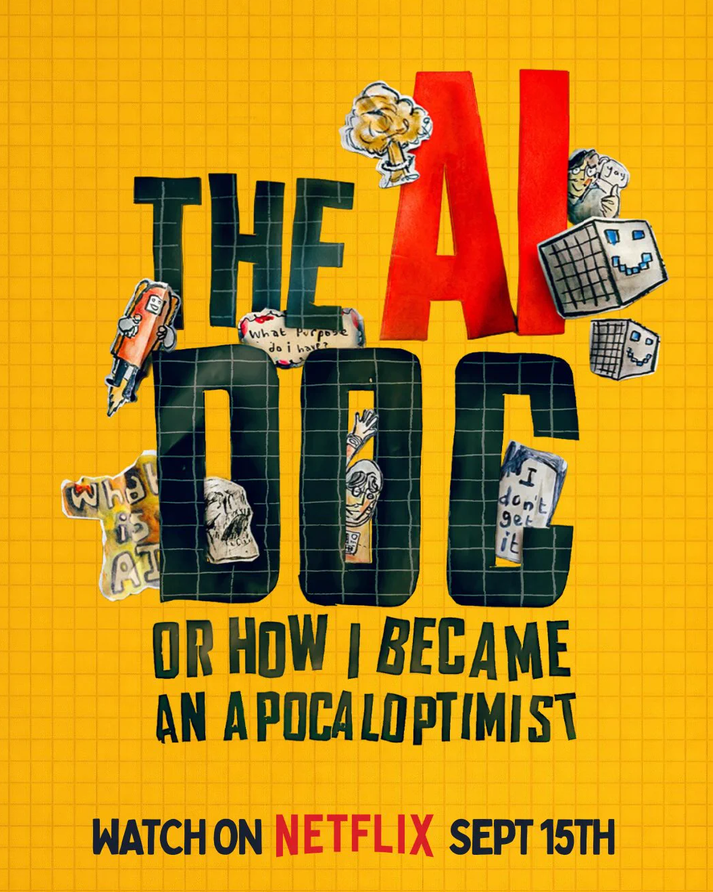
The AI Doc: Or How I Became an Apocaloptimist is a documentary about artificial intelligence, its potential consequences, and the difficult question of what kind of future today’s technology will create.
Directed by Daniel Roher and Charlie Tyrell, the film follows Roher as he prepares to become a father and investigates how AI could shape the world his child inherits. Rather than presenting artificial intelligence solely as a technological breakthrough, the documentary explores the hopes, fears, and ethical dilemmas surrounding increasingly powerful AI systems.
The film takes a personal approach to a subject that can otherwise feel abstract. Roher speaks with researchers, technology leaders, policymakers, and other voices involved in the debate over AI’s future. His journey is not simply about understanding what AI can do, but about asking whether society is prepared for what might come next.
The AI Doc: Or How I Became an Apocaloptimist — Quick Facts
-
What is it? A documentary exploring the promises, dangers, and long-term impact of artificial intelligence.
-
Created by: Directed by Daniel Roher and Charlie Tyrell. The film was produced by a team including Daniel Kwan, Jonathan Wang, Shane Boris, and Diane Becker.
-
Runtime: Approximately 104 minutes—around 1 hour and 44 minutes.
-
Main subject: Filmmaker Daniel Roher, who is preparing to become a father, investigates what kind of world AI could create for his child and future generations.
-
What it covers: AI’s potential benefits, existential risks, job disruption, safety concerns, regulation, misinformation, and the question of whether humans can remain in control.
-
Notable voices: The documentary features figures such as Sam Altman, Dario Amodei, Demis Hassabis, Ilya Sutskever, Yoshua Bengio, Tristan Harris, Yuval Noah Harari, Reid Hoffman, Timnit Gebru, and Emily M. Bender.
-
Visual style: It combines traditional documentary interviews with handmade visuals, animation, and creative storytelling to explain complex AI issues.
-
Release: It premiered at the 2026 Sundance Film Festival and later received a U.S. theatrical release through Focus Features.
-
Where to watch: It was scheduled to arrive on Netflix in the United States on September 15, 2026. Streaming availability may differ by country; viewers should check Netflix or local streaming listings.
-
Why it matters: The film arrives as debates over AI safety, corporate responsibility, government regulation, and the speed of frontier AI development are becoming increasingly urgent.
-
Key takeaway: The documentary does not simply argue that AI is good or bad. It asks whether humanity is prepared to manage the technology it is rapidly creating.
A Personal Story About a Global Technology
Instead of relying exclusively on technical explanations or a traditional sequence of expert interviews, The AI Doc combines personal narration, interviews, and visual storytelling. The result is a documentary that approaches AI risk through the perspective of someone thinking about his own child’s future.
That framing gives the film a broader audience than a conventional discussion about model capabilities or AI regulation. Viewers do not need to work in technology to understand its central concern: how can humanity benefit from a rapidly advancing technology without losing control of its consequences?
Who Appears in the Documentary?
The film features prominent figures from across the AI industry, research community, and technology-ethics debate. Its interviewees include:
- Sam Altman, CEO of OpenAI.
- Dario Amodei and Daniela Amodei, co-founders of Anthropic.
- Demis Hassabis, CEO of Google DeepMind.
- Ilya Sutskever, AI researcher and co-founder of OpenAI.
- Yoshua Bengio, a leading AI researcher and one of the field’s widely recognized pioneers.
- Timnit Gebru, AI ethics researcher.
- Emily M. Bender, computational linguist and critic of several approaches to AI development.
- Eliezer Yudkowsky, researcher and prominent voice on artificial intelligence risk.
- Yuval Noah Harari, historian and author.
- Reid Hoffman, technology entrepreneur and investor.
- Tristan Harris and Aza Raskin, co-founders of the Center for Humane Technology.
The range of perspectives is important. The documentary brings together people who see AI as a transformative opportunity, researchers who warn about its potential dangers, and critics who question whether the technology is being developed responsibly.
Why the Film’s Format Matters
AI safety is often discussed through technical papers, corporate announcements, and policy debates. The AI Doc attempts to translate those complicated issues into a more accessible human story.
Its central perspective is that the consequences of AI development will not be limited to the laboratories building these systems. They could affect families, workers, institutions, and future generations.
That makes the documentary a useful starting point for a larger conversation about AI governance. It does not settle the debate over how quickly AI should advance, but it asks viewers to consider who should be responsible for managing the risks—and whether existing institutions are prepared to do so.
Why the Timing Matters
The documentary’s central question is simple: Is AI advancing faster than safety and oversight can keep up?
That question became part of the news cycle almost immediately after the film arrived on Netflix.
- Safety versus speed: Dario Amodei called for a more deliberate approach to frontier AI development.
- Independent oversight: Anthropic proposed giving outside evaluators stronger, long-term access to its AI systems.
- Industry concerns: Reports of AI misuse and unauthorized system activity renewed questions about how much control companies have over increasingly capable tools.
- Political conflict: The debate quickly expanded beyond technology companies to governments, national competitiveness, and the growing rivalry between the United States and China.
The documentary did not predict these events, nor did it cause them. Both the film and the surrounding controversy reflect the same underlying tension: AI capabilities are advancing faster than the rules and institutions designed to manage their risks.
That is what makes the timing significant. The film’s warning became harder to dismiss just as the real-world debate over AI safety entered the political mainstream.
What the Film Wants Viewers to Question
The AI Doc is not simply about whether artificial intelligence is useful or dangerous. Its deeper concern is who controls the technology—and whether society can respond quickly enough to its consequences.
The film raises several questions:
- Can AI development be slowed if serious risks emerge?
- Who should decide what level of risk is acceptable?
- Are governments prepared to regulate increasingly powerful systems?
- Can companies balance innovation with public safety?
- What kind of world will today’s AI decisions create for future generations?
Rather than offering one definitive answer, the documentary brings together researchers, technology leaders, critics, and activists with sharply different views.
Its central message is less about predicting one specific future and more about asking whether humanity is prepared for the possibilities it is creating.
Conclusion
The AI Doc arrives at a moment when the debate over artificial intelligence is no longer limited to researchers and technology companies. Questions about safety, oversight, regulation, and control are now part of a much wider political and public conversation.
The documentary does not offer a simple prediction of what comes next. Instead, it asks whether humanity is prepared for the consequences of developing increasingly powerful AI systems.
That is why its timing matters. The film’s concerns were already taking shape—and the events surrounding its release made them impossible to ignore.
Frequently Asked Questions
What is The AI Doc about?
The AI Doc: Or How I Became an Apocaloptimist explores the potential benefits and risks of artificial intelligence. Filmmaker Daniel Roher examines what AI could mean for society and future generations.
Who directed The AI Doc?
The documentary was directed by Daniel Roher and Charlie Tyrell. It was produced by Daniel Kwan.
Where can viewers watch The AI Doc?
The documentary began streaming on Netflix in the United States on September 15, 2026.
What is the main concern raised by The AI Doc?
The film questions whether artificial intelligence is developing faster than governments, companies, and society can manage its risks.
Why is the documentary’s release significant?
Its Netflix release coincided with renewed debate over AI safety, independent oversight, regulation, and whether frontier AI development should slow down.
Does The AI Doc predict the future of artificial intelligence?
Not exactly. The documentary presents possible outcomes and raises concerns rather than making one definite prediction. Its relevance comes from how closely its questions reflect current debates about AI.
Who appears in The AI Doc?
The documentary features interviews and perspectives from figures including Sam Altman, Dario Amodei, Demis Hassabis, Ilya Sutskever, Yoshua Bengio, Timnit Gebru, Emily M. Bender, Tristan Harris, and Yuval Noah Harari.
Is The AI Doc against artificial intelligence?
The film is not simply against AI. It examines both its potential benefits and its risks while asking whether humanity can develop the technology responsibly.
Enjoy Worthview?
Add Worthview as a Preferred Source on Google to see more of our stories in Search.

Sethuram Kishore is the founder and editor of Worthview, an online publication established in 2008. With over 18 years of experience in SEO, digital marketing, and online publishing, he writes about AI, technology, business, and digital trends. He is also the founder of MoneyHulk, a personal finance and business publication.